
Experiential trail On the trail of fossils
Enjoy an interactive and educational experience that takes you back to the Triassic period.
Details
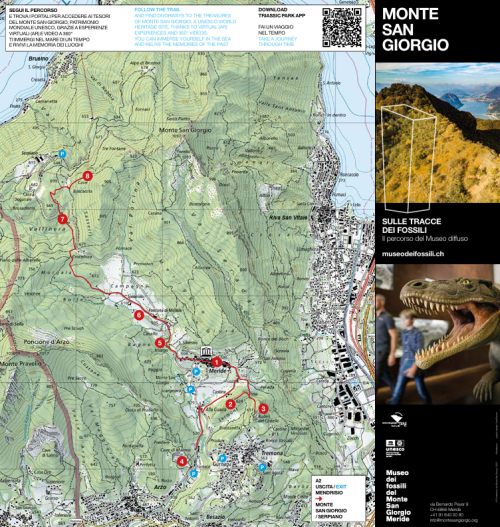
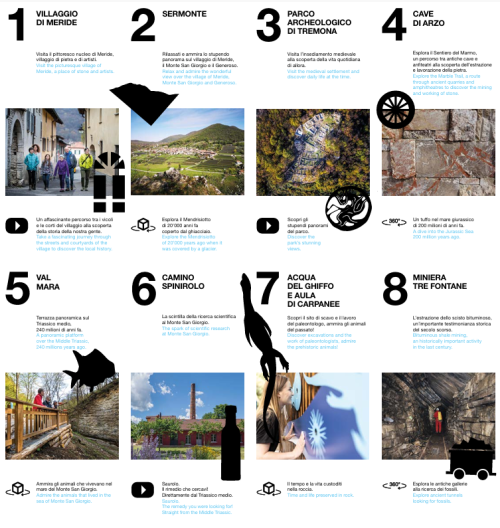
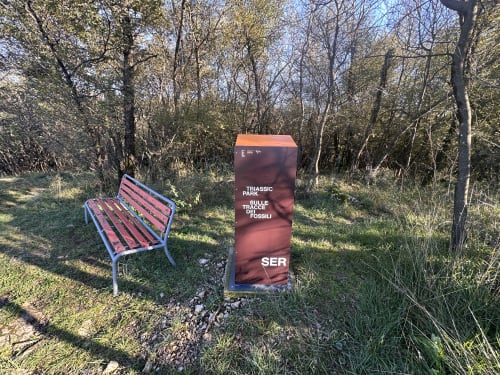
The ‘On the trail of fossils’ route runs between Arzo, Tremona, Meride and Serpiano, offering an interactive and educational experience that allows visitors to relive 240 million years of history. There are eight stations along the route, each of which is enriched with information totems. Thanks to QR codes on the totems, visitors can access augmented reality and 360° multimedia content, including images and videos, for an even more immersive journey into the past.
During the Middle Triassic period (approximately 247–237 million years ago), what is now Monte San Giorgio was not a mountain but a marine lagoon in a subtropical climate. The waters, less than 100 metres deep, were home to a rich fauna: invertebrates such as molluscs, brachiopods, crustaceans and echinoderms, but also conodonts (ancient animals similar to lampreys), cartilaginous and bony fish, and numerous marine reptiles. The coastal areas were also teeming with insects, reptiles – some of them large – and lush vegetation consisting of tree ferns, conifers and primitive plants.
This ancient marine environment has preserved extraordinary fossil finds over time, making Monte San Giorgio one of the most important sites in the world for the study of Middle Triassic fauna. Since 2013, the site has been recognised as a UNESCO World Heritage Site.
The route is easily accessible by public transport and by car.
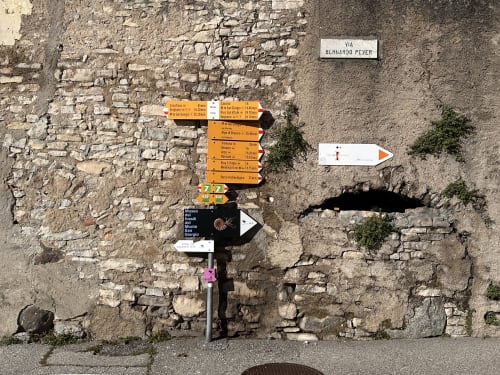
By car, you can reach Arzo, Tremona, Meride and Serpiano by following the road signs for Mendrisio. From there, the starting points of the route are well signposted. Parking is available near the main locations.
By public transport, regional buses run from Mendrisio railway station to Arzo, Meride or Tremona. The stops are a short distance from the trailheads.
For hiking and cycling enthusiasts, the area offers numerous well-marked trails and cycle paths connecting the various stages of the trail.
For an even more complete experience, we recommend starting the route at the Monte San Giorgio Fossil Museum in Meride, which offers an in-depth introduction to the geological and palaeontological context of the area.
The route is accessible all year round, but the best seasons are spring and autumn, when temperatures are mild and the landscape is particularly picturesque.
The route is also suitable for children, thanks to the interactive and visual content. However, it is advisable to assess the length of the itinerary according to the age of the children.
Itinerary
- Village of Meride
- Sermonte
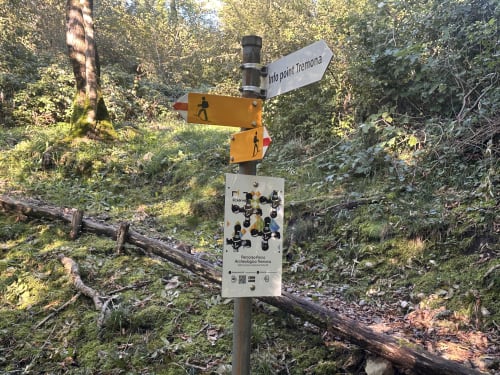
- Tremona Archaeological Park
- Arzo Caves
- Val Mara
- Camino Spinirolo
- Acqua del Ghiffo and Aula di Carpanee
- Tre Fontane Mine
Duration
The entire route takes about 3-4 hours, allowing for a leisurely visit with stops at the interactive stations and panoramic viewpoints.
The itinerary can be divided into shorter stages (e.g. Meride–Tremona or Meride–Serpiano), each lasting 1-2 hours.
If you also include a visit to the Meride Fossil Museum and lunch or a picnic, you can easily plan a whole day to enjoy the experience to the full.

In evidence
Location


Other details
Warnings:


